

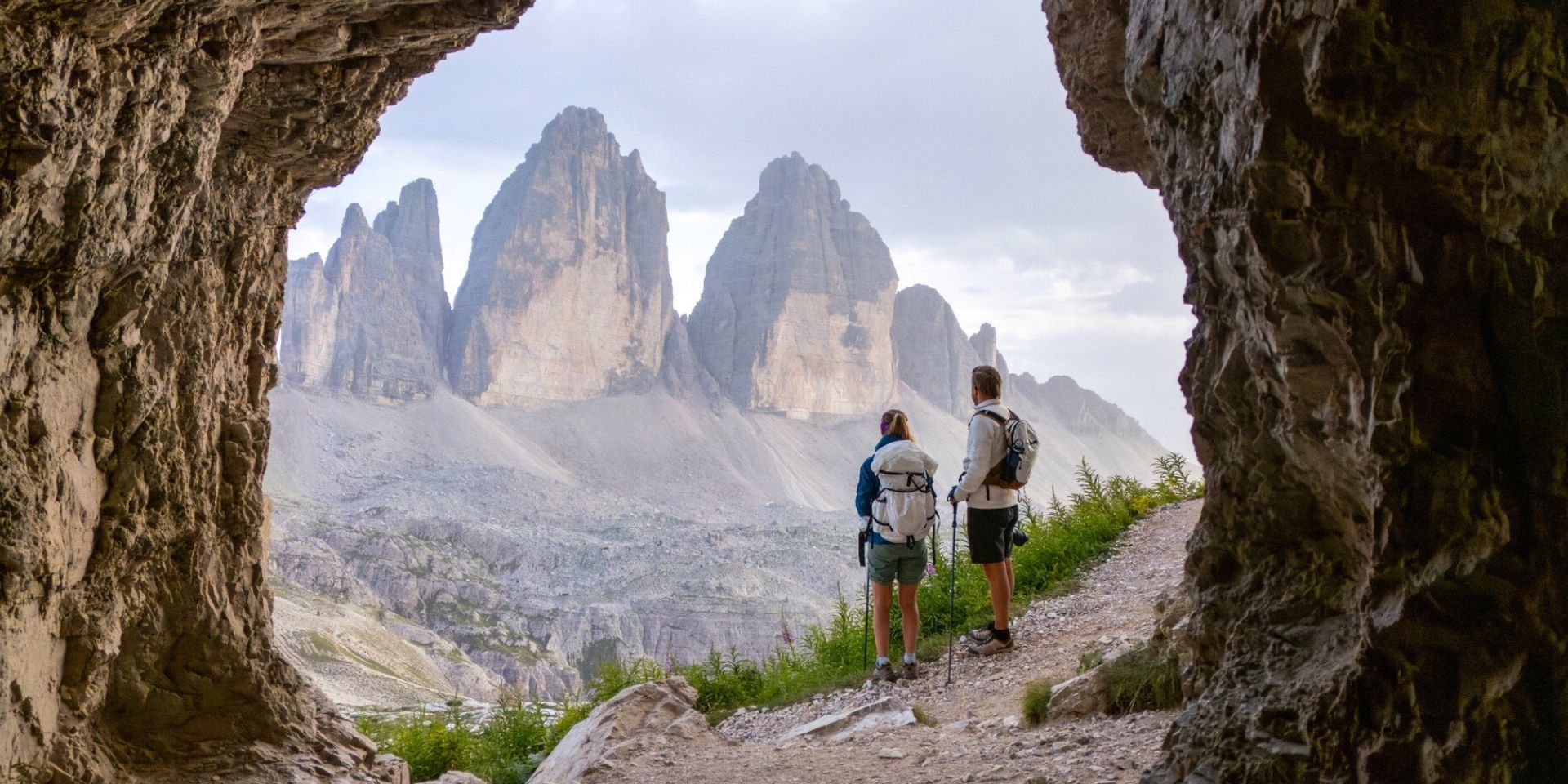
The Dolomites stand as one of Europe’s most breathtaking mountain ranges, offering hikers an unparalleled blend of dramatic limestone peaks, lush alpine meadows, and rich cultural experiences. This UNESCO World Heritage site presents a paradise for outdoor enthusiasts with over 3,800 hiking trails ranging from gentle walks to challenging multi-day treks. When you venture into these magnificent mountains, you’ll discover why they’re often called “the most beautiful natural architecture on Earth”. Each trail reveals spectacular vistas that change with the light throughout the day, transforming the pale rock faces from soft pink to fiery orange as the sun moves across the sky.
Whether you’re planning your first Dolomites adventure or returning to explore new paths, this article will provide essential tips, highlight unforgettable routes, and share practical experiences to help you make the most of hiking in this extraordinary alpine wonderland.
The magnificence of the Dolomites landscape
The Dolomites represent a true paradise for hikers, boasting an extraordinary alpine landscape that seems almost otherworldly. This mountain range in northeastern Italy features distinctive pale limestone formations that dramatically rise from lush green meadows, creating a striking contrast that captivates visitors from the first glance. The UNESCO World Heritage site encompasses more than 3,800 hiking trails across approximately 142,000 hectares, offering endless exploration possibilities for outdoor enthusiasts.
What makes the Dolomites truly special is their unique geological composition. Unlike other parts of the Alps, these mountains are formed from ancient coral reefs that emerged from prehistoric seas millions of years ago. This distinctive makeup gives them their characteristic pale color and jagged appearance, earning them the nickname “Pale Mountains.” At sunset, the limestone peaks undergo a mesmerizing transformation known as “enrosadira” or “alpenglow,” when the mountains shift from pale white to vibrant shades of pink, orange, and finally deep purple—a phenomenon that has inspired countless photographers and artists.
Beyond their geological significance, the Dolomites also represent a fascinating cultural crossroads where Italian, German, and Ladin traditions blend harmoniously. As you hike through these mountains, you’ll encounter charming villages, traditional mountain huts, and perhaps hear the melodic sounds of the Ladin language—one of Europe’s oldest Romance languages still spoken by local communities. This rich cultural tapestry adds another dimension to your hiking experience, making the Dolomites not just a natural wonder but a living cultural landscape worth exploring step by step.
Getting to the Dolomites: transport options and practical advice
Reaching the breathtaking Dolomites requires some planning, but the journey is well worth the effort. Located in northeastern Italy, primarily in the South Tyrol (Alto Adige) region, these magnificent mountains are accessible through several transportation options depending on your starting point and preferences.
For international travelers, the most convenient airports include Venice Marco Polo, Innsbruck (Austria), Verona, and Milan. From these gateways, you have multiple options to reach the heart of the Dolomites:
-
- By car: Renting a vehicle offers the greatest flexibility for exploring the region. The main access route from the north is via the Brenner Pass, following signs to Bolzano (Bozen). If you’re driving through the pass, consider pre-registering your license plate with the highway authority to avoid long waits at toll stations. Once in the region, you’ll find well-maintained mountain roads connecting major towns like Cortina d’Ampezzo, Val Gardena, and the Seiser Alm (Alpe di Siusi).
- By train: The Italian railway network connects major cities to Bolzano, the capital of South Tyrol and an excellent base for Dolomites adventures. From Munich, regular trains reach Bolzano in approximately 4 hours. Once in Bolzano, local buses connect to smaller towns like Völs am Schlern (Fiè allo Sciliar), an ideal starting point for hikes in the Rosengarten and Seiser Alm areas.
- By bus: An extensive network of regional buses serves the Dolomites region, connecting major towns and many trailheads. During hiking season, special shuttle services often operate to popular starting points.
Whichever transportation method you choose, remember that mountain weather can be unpredictable, so allow extra travel time and check road conditions before departing. Many villages in the Dolomites have limited parking, so if arriving by car, verify accommodation parking options in advance or consider using peripheral parking areas and local shuttles.
Best seasons for hiking adventures in the Dolomites
Timing your hiking trip to the Dolomites properly can make the difference between a magical alpine experience and a potentially challenging or even dangerous one. The mountain weather in this region follows distinct seasonal patterns that hikers should consider when planning their adventure.
The prime hiking season in the Dolomites runs from early July through mid-September. During this period, most mountain passes are free from snow, alpine flowers blanket the meadows in vibrant colors, and mountain huts (rifugi) operate at full capacity. July and August offer the most reliable weather conditions with warmer temperatures, though these months also bring the highest number of visitors. If you prefer quieter trails, consider early July or September when you’ll encounter fewer hikers while still enjoying favorable conditions.
Late June can also provide excellent hiking opportunities, especially at lower elevations, though some high-altitude trails may still have snow patches. By mid-September, the summer crowds thin considerably, and the landscape transforms with beautiful autumn colors. However, be aware that some mountain huts begin closing for the season from mid-September onward, and early snowfall becomes increasingly possible at higher elevations.
Weather in the Dolomites can change rapidly regardless of season. Even during summer months, afternoon thunderstorms are common, making early morning starts advisable for longer hikes. Always check the local weather forecast before setting out, and be prepared with appropriate clothing for sudden temperature drops, which can occur even on sunny days. Mountain hut wardens (rifugisti) are excellent sources of up-to-date information about trail conditions and weather forecasts—don’t hesitate to ask their advice before embarking on your day’s adventure.
Remember that snow can persist on north-facing slopes well into summer, and surprise snowstorms can occur even in August at elevations above 2,500 meters. Pack accordingly and always prioritize safety over reaching your planned destination when conditions turn unfavorable.
Essential trails and routes for every hiking level
The Dolomites offer an incredible variety of hiking experiences suitable for all skill levels, from leisurely meadow walks to challenging multi-day treks. Whatever your experience, you’ll find trails that provide the perfect balance of challenge and reward in this magnificent mountain range.
For beginners and families, the Seiser Alm (Alpe di Siusi) presents an ideal starting point. As Europe’s largest high-altitude alpine meadow, it features gentle, well-marked paths with spectacular mountain views. The circular trail around the iconic Tre Cime di Lavaredo (Three Peaks) is another accessible option at approximately 10 kilometers with minimal elevation gain, offering some of the most photographed vistas in the Dolomites.
Intermediate hikers will find fulfilling challenges on the Seceda Ridgeline trail in Val Gardena, where dramatic sawtooth mountains create an otherworldly backdrop. The Adolf Munkel Trail beneath the imposing north face of the Geisler/Odle peaks combines moderate difficulty with breathtaking scenery. For a taste of Dolomiti culture alongside natural beauty, consider the trail from Rifugio Scotoni to Rifugio Lagazuoi, where you’ll encounter remnants of World War I fortifications while enjoying spectacular limestone formations.
Experienced hikers seeking more demanding adventures should explore the Alta Via 1 or Alta Via 2 – legendary long-distance trails that traverse the Dolomites from north to south. These routes typically require 8-14 days to complete, though they can be tackled in sections. The five-day circuit through the Rosengarten group, including an ascent of Kesselkogel (the highest peak in the massif), offers challenging terrain with via ferrata sections and unforgettable views of the Catinaccio mountains glowing red at sunset.
For those interested in via ferrata experiences (protected climbing routes), the Dolomites offer some of Europe’s finest, from the beginner-friendly Piz da Lech route to the challenging Maximilian route near the Antermoia Lake. These combine hiking with protected climbing sections, providing thrilling experiences for those with appropriate equipment and skills.
Whichever trail you choose, the excellent signposting system in the Dolomites makes navigation straightforward, with numbered routes clearly marked on maps and trail junctions.
Mountain refuges and accommodation options in the Dolomites
One of the most enchanting aspects of hiking in the Dolomites is the network of mountain refuges (rifugi in Italian, Hütten in German) that dot the landscape. These alpine shelters range from rustic huts to comfortable lodges, offering hikers warm meals and a place to rest after a day on the trails. Staying in these refuges allows you to experience the mountains more intimately, waking up to spectacular sunrises and extending your hiking range beyond what day trips would allow.
The mountain refuge system in the Dolomites is exceptionally well-developed, with options catering to different preferences and budgets. Most refuges offer dormitory-style accommodations with shared facilities, though many also provide private rooms for those seeking more comfort. Prices typically range from €40-65 per person per night, often including half-board (dinner and breakfast). The hearty mountain cuisine served at these refuges—featuring local specialties like canederli (bread dumplings), polenta, and apple strudel—is a highlight in itself.
For those planning multi-day hikes, several iconic refuges deserve special mention. The Grasleitenhütte (Rifugio Principe) sits in a dramatic setting beneath towering peaks of the Rosengarten group, while the Tierser Alpl (Rifugio Alpe di Tires) offers panoramic views at the crossroads of several major hiking routes. The Schutzhaus Mahlknechthütte provides comfortable accommodation on the beautiful Seiser Alm, and the Plafötschalm combines traditional architecture with modern amenities.
If mountain huts aren’t your style, the valleys surrounding the Dolomites offer numerous accommodation alternatives. Towns like Völs am Schlern (Fiè allo Sciliar), Cortina d’Ampezzo, Ortisei, and Canazei provide everything from family-run guesthouses to luxury hotels. These make excellent bases for day hikes, with the advantage of more amenities and dining options.
Regardless of which type of accommodation you choose, advance reservations are essential, especially for stays during the peak summer months. Mountain refuges often book up months ahead for July and August, while the more remote or smaller huts may have limited capacity. Most refuges accept online bookings through their websites or central reservation systems, making planning your mountain adventure relatively straightforward.
What to pack for your Dolomites hiking expedition
Proper preparation and packing are essential for a safe and enjoyable hiking experience in the Dolomites. Mountain weather can be notoriously unpredictable, with conditions changing rapidly even in summer months. A well-thought-out packing list ensures you’re ready for whatever the mountains might throw your way.
For day hikes or multi-day treks staying in mountain refuges, a 30-35 liter backpack usually provides sufficient capacity. When packing this backpack, prioritize these essential items:
-
-
- Footwear: Invest in quality hiking boots with ankle support and good tread. Break them in before your trip to avoid blisters. For more technical routes or via ferrata paths, approach shoes with sticky rubber soles offer better grip on rock surfaces.
- Clothing layers: Follow the three-layer principle—a moisture-wicking base layer, an insulating mid-layer (fleece or lightweight down), and a waterproof/windproof outer shell. Even in summer, temperatures at higher elevations can drop significantly, especially when the sun disappears behind clouds.
- Protection items: A sun hat, high-SPF sunscreen, and quality sunglasses are non-negotiable at altitude where UV radiation is intense. A lightweight beanie and gloves are also recommended, even in summer.
- Hydration and nutrition: Carry at least 1.5-2 liters of water in a reusable bottle or hydration system. Pack energy-dense snacks like nuts, dried fruits, and energy bars for quick fuel on the trail.
- Navigation tools: While trails are generally well-marked, a detailed topographic map, compass, and perhaps a GPS device provide important backup. Many hiking apps now offer offline maps of the Dolomites region.
- Safety items: A basic first aid kit, emergency whistle, headlamp with spare batteries, and a lightweight emergency blanket should accompany you on every hike.
-
For overnight stays in mountain refuges, add a sleeping bag liner (most huts provide blankets but require guests to use their own liners), a quick-dry microfiber towel, and a change of clothes. Trekking poles can be invaluable for reducing strain on knees during descents and providing stability on uneven terrain.
Remember that packing light is crucial for comfort on the trail, but never compromise on essential safety items. The mountains demand respect, and being properly equipped is the first step in demonstrating that respect.
Making the most of your Dolomites experience: insider tips
Beyond the essential planning and packing, certain insider knowledge can elevate your Dolomites hiking experience from memorable to truly extraordinary. These practical tips, gathered from experienced mountain guides and local hikers, will help you connect more deeply with this remarkable landscape.
Start your hiking days early, ideally hitting the trail by 7-8 AM. This strategy offers multiple benefits: you’ll enjoy the magical morning light that bathes the pale mountains in a golden glow, avoid the midday heat, and significantly reduce your chances of being caught in afternoon thunderstorms, which are common in the Dolomites during summer. Early starts also mean quieter trails and better wildlife spotting opportunities.
Take time to understand the unique cultural context of the region. The Dolomites sit at a fascinating cultural crossroads where Italian, German, and Ladin influences blend. Learning a few basic phrases in these languages will be appreciated by locals. This cultural mosaic extends to the cuisine; don’t miss trying specialties like speck (smoked ham), canederli (bread dumplings), and the exceptional local wines like Lagrein and Gewürztraminer.
Photography enthusiasts should plan their hikes around the famous “enrosadira” phenomenon—the magical pink alpenglow that illuminates the Dolomites at sunrise and sunset. The Rosengarten/Catinaccio group is particularly renowned for this spectacle, which inspired countless legends about mountain spirits and kings.
For a deeper connection with the landscape, consider hiring a local guide for at least one day of your trip. Beyond ensuring safety, guides share fascinating insights about geology, flora, fauna, and local history that you might otherwise miss. Many can also lead you to hidden gems off the typical tourist paths.
Finally, embrace the mountain hut culture by engaging with hut wardens and fellow hikers. Evening meals in rifugi often become communal affairs where stories are exchanged and friendships formed. This social aspect of mountain life is as much a part of the Dolomites experience as the hiking itself—a chance to slow down, connect, and appreciate the special community that forms among those who love these mountains.
Your unforgettable Dolomites adventure awaits
Hiking in the Dolomites offers more than just physical exercise—it’s a journey through a landscape where nature’s artistry reaches its pinnacle. From the pale limestone peaks that glow pink at sunset to the vibrant alpine meadows dotted with wildflowers, every step brings new wonders to discover. Whether you choose a gentle day hike or commit to a challenging multi-day trek, the memories of these mountains will stay with you long after you’ve returned home.
The combination of breathtaking natural beauty, excellent trail infrastructure, comfortable mountain refuges, and rich cultural experiences makes the Dolomites a premier hiking destination for outdoor enthusiasts from around the world. By following the tips and insights shared in this article, you’ll be well-prepared to create your own unforgettable Dolomites story.
Ready to experience the magic of the Dolomites firsthand? Explore our specially curated hiking tours that showcase the best of this alpine wonderland while providing expert guidance and seamless logistics. Your Dolomites adventure is just a few clicks away!