
Setting out on a hiking adventure requires more than just enthusiasm and a sense of direction—it demands the right equipment to ensure safety, comfort, and enjoyment along the trail. Whether you’re planning a gentle walk through rolling hills or challenging yourself with a mountain trek, your hiking equipment will be your trusted companion throughout the journey. At FunActive Tours, we understand that the quality of your gear directly impacts the quality of your experience. That’s why we’ve compiled this comprehensive article to hiking equipment, covering everything from footwear to backpacks, clothing to navigation tools. With proper preparation and the right gear, you’ll be ready to embrace the natural beauty that awaits on the paths less traveled, experiencing landscapes in their most authentic form while staying protected against the elements and unexpected situations.
Finding the perfect hiking footwear
Your hiking experience begins from the ground up, making footwear perhaps the most crucial element of your hiking equipment. The perfect hiking boots or shoes provide stability, protection, and comfort for countless kilometers on varying terrains. When selecting hiking footwear, consider the type of trails you’ll be exploring—lightweight trail runners might suffice for gentle paths, while rugged mountain routes demand sturdy boots with ankle support.
Visit a specialized outdoor retailer in the afternoon when your feet are naturally more swollen, simulating how they’ll feel after hours on the trail. Bring the socks you intend to wear hiking—ideally those made from a blend of merino wool and synthetic fibers that wick moisture away from your feet, preventing blisters from forming.
Take time to test your prospective footwear on inclined surfaces that mimic uphill and downhill terrain. The ideal fit allows your toes to wiggle freely while keeping your heel securely in place. Pay attention to how the shoe flexes as you walk—it should roll naturally with your foot’s movement. For hikers with specific foot conditions or orthopedic needs, consider custom insoles that provide additional support exactly where you need it.
Remember that breaking in your footwear before a significant hike is essential. Even the most perfectly fitted boots need time to adapt to your unique foot shape, so wear them on shorter walks before committing to a full-day adventure on the trails.
Weather-ready clothing for all conditions
The old hiking adage holds true: “There’s no such thing as bad weather, only inappropriate clothing.” Your hiking wardrobe should prepare you for unexpected weather shifts that frequently occur in mountain environments and open landscapes. The key to comfort lies in the layering system that allows you to adapt to changing conditions throughout your journey.
Start with a moisture-wicking base layer that pulls sweat away from your skin. These technical fabrics, unlike cotton which retains moisture, keep you dry and prevent the chilling effect of wet clothing against your skin. For moderate temperatures, a lightweight long-sleeve shirt offers both comfort and sun protection.
The mid-layer provides insulation and retains body heat. Depending on the climate, this could be a fleece jacket, a lightweight down vest, or a merino wool pullover. The beauty of proper layering is the ability to add or remove items as your body temperature and weather conditions fluctuate.
Your outer layer serves as your shield against wind and precipitation. A quality lightweight, packable rain jacket with sealed seams should always find space in your backpack, even on days with clear forecasts. Softshell jackets offer an excellent compromise between breathability and weather resistance for variable conditions.
For your lower body, convertible hiking pants provide versatility with zip-off legs that transform into shorts. Look for quick-drying, durable fabrics with a bit of stretch for unrestricted movement on challenging terrain. In colder conditions, add thermal leggings underneath for additional warmth without bulk.
Complete your clothing system with a hat that provides sun protection, gloves appropriate for the temperature, and a buff or neck gaiter that can serve multiple purposes from sun protection to warmth.
What to pack in your hiking backpack
Selecting the right backpack and packing it efficiently transforms your hiking experience from burdensome to blissful. Your pack should match the duration and demands of your adventure—a compact 15-20 liter daypack suffices for short excursions, while multi-day treks require 30+ liters with additional organizational features.
When packing, distribute weight properly to maintain balance and reduce strain. Place heavier items close to your back and centered at shoulder blade level. Keep frequently accessed items like snacks, water, and navigation tools in outer pockets or top compartments for easy retrieval without unpacking.
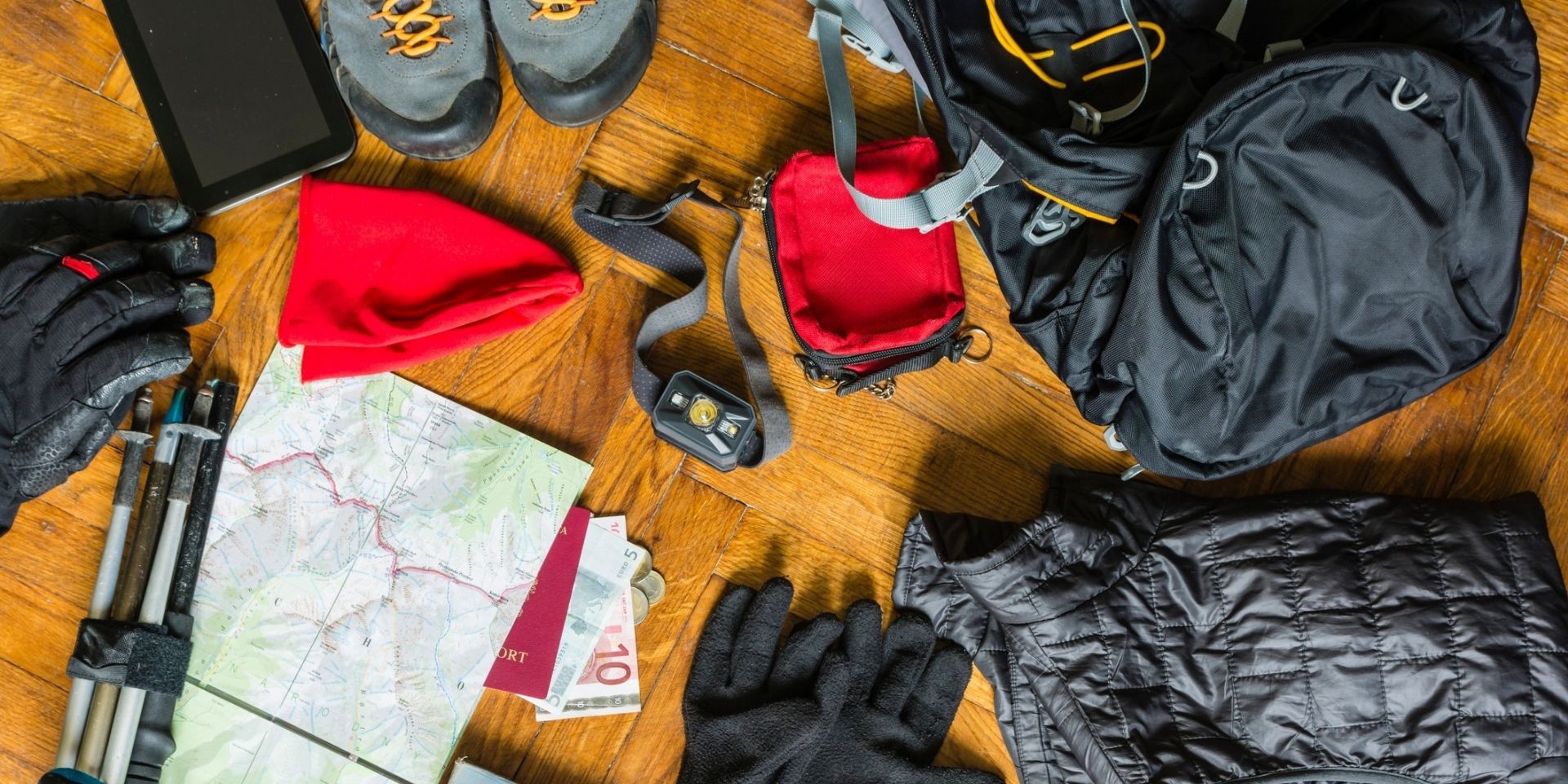
Essential items for your hiking backpack:
- Hydration system: Carry at least 1 liter of water for every 2 hours of hiking, adjusting for temperature, intensity, and availability of water sources. Consider a hydration bladder for convenient sipping on the move.
- Nutrition: Pack energy-dense foods like nuts, dried fruits, energy bars, and sandwiches. Include both quick-energy carbohydrates and longer-lasting proteins.
- Navigation tools: Carry a physical map and compass even if using digital devices. A GPS unit or smartphone with offline maps provides additional security.
- First aid kit: Include bandages, antiseptic wipes, blister treatment, pain relievers, personal medications, and emergency contact information.
- Emergency essentials: A whistle, emergency blanket, headlamp with extra batteries, and fire-starting tools can be lifesavers in unexpected situations.
- Personal items: Sunscreen, insect repellent, toilet paper, hand sanitizer, and a small towel enhance comfort on the trail.
Remember that while comprehensive preparation is crucial, every additional item adds weight. Evaluate each piece of equipment by asking: “Is this essential for safety or significant comfort?” This mindful approach ensures you’re well-equipped without being unnecessarily burdened.
Essential accessories for safety and comfort
Beyond the fundamental hiking equipment, certain accessories significantly enhance both safety and comfort on the trail. These items might seem supplementary, but experienced hikers consider them indispensable companions for responsible outdoor adventures.
Trekking poles provide stability on uneven terrain and reduce impact on your knees, especially during descents. They effectively transform a two-legged hiking stance into a more stable four-point contact with the ground. When selecting poles, look for adjustable models that can be customized to your height and the terrain’s demands. Collapsible designs allow for easy storage when not needed.
Protection from the elements extends beyond clothing. Quality sunglasses with UV protection shield your eyes from harmful rays, particularly at higher altitudes where solar intensity increases. A broad-brimmed hat offers additional face protection, while sunscreen with high SPF should be reapplied regularly, even on cloudy days.
Navigation tools remain crucial despite technological advances. While smartphone apps provide convenient mapping, a traditional compass and physical map serve as reliable backups that never lose battery power. Consider investing in a waterproof map case to protect these essential guides in adverse weather.
For longer hikes, a portable water filter or purification tablets ensure access to safe drinking water from natural sources, reducing the weight of carried water. Meanwhile, a lightweight emergency shelter—such as a bivy sack or emergency blanket—provides crucial protection if you’re unexpectedly caught outdoors overnight.
Communication devices deserve special consideration. While cell phones may lack reception in remote areas, a whistle—the universal distress signal when blown in sets of three—weighs practically nothing yet can alert others to your location. For more isolated adventures, consider a personal locator beacon or satellite messenger for emergency communication beyond cellular networks.
Specialized equipment for different hiking terrains
Different landscapes demand specialized hiking equipment to navigate their unique challenges safely and efficiently. As you explore varied terrains with FunActive Tours, adapting your gear to specific environmental conditions becomes essential for an optimal experience.
Alpine environments with steep, rocky ascents require more technical equipment than gentle woodland paths. In these high-elevation settings, hiking boots with semi-rigid soles and pronounced tread patterns provide necessary traction and ankle support. Consider adding microspikes or lightweight crampons to your pack when traversing terrain that might feature lingering snow patches or icy sections, even during warmer months.
Desert hiking presents contrasting challenges where water management becomes paramount. Increase your standard water carrying capacity and consider specialized hydration reservoirs with insulated tubes to prevent drinking water from becoming uncomfortably warm. Sun protection escalates in importance—upgrade to higher SPF sunscreens, add sun sleeves for arms, and opt for lightweight, full-coverage clothing with UPF (Ultraviolet Protection Factor) ratings.
Coastal trails with their combination of sand, rocks, and potential water crossings benefit from quick-drying footwear with closed mesh that prevents sand infiltration. Waterproof bags or cases protect electronics and valuables from salt spray and unexpected waves.
Dense forest environments with potential undergrowth call for more robust lower-leg protection. Gaiters prevent debris from entering your boots while providing additional defense against scratches from vegetation and potential tick exposure. A packable machete might be necessary in some tropical environments, though always check local regulations before carrying such tools.
Marshy or wetland areas might require waterproof footwear or even trekking sandals that can handle submersion. Consider adding trekking gaiters specifically designed for wet conditions to keep your lower legs dry when navigating through shallow water or damp vegetation.
Equip yourself for hiking adventures with FunActive Tours
The right hiking equipment transforms a simple walk into an extraordinary adventure, providing safety, comfort, and confidence on every trail. From selecting footwear that supports your unique stride to packing a backpack with essentials that prepare you for unexpected challenges, each piece of gear plays a vital role in your outdoor experience. Remember that quality equipment is an investment in countless memorable journeys through breathtaking landscapes.
At FunActive Tours, we understand the profound connection between proper preparation and exceptional hiking experiences. Our tours through Europe’s most stunning landscapes combine our extensive knowledge of trails with professional support that allows you to focus on the joy of discovery. Whether you’re drawn to the majestic Dolomites, picturesque Alpine paths, or historic routes through charming villages, we invite you to explore our hiking adventures where unforgettable experiences await with every step.